
How to Analyze Competitor Keywords for Better Ranking
Introduction
If you are serious about SEO, you cannot just look at your own website. You also need to see what others in your space are doing, which topics they focus on, and how they bring in traffic from Google. That is where you start to Analyze Competitor Keywords in a structured way, instead of guessing.
In this blog, I will walk you through what competitor keyword work actually means, how to find your real SEO competitors, the types of keywords you should study, and how to turn all of that into a clear plan for your own site.
What Is Competitor Keyword Analysis?
Let us start with a basic definition before we go deeper.
Competitor keyword analysis is simply the process of looking at which keywords your competitors are ranking for, how their pages are structured, and which topics they cover that you do not. When you Analyze Competitor Keywords, you are trying to understand their strengths, gaps, and patterns.
The goal here is not to blindly copy every keyword they use. The goal is to learn from what is already working in your niche and then build content that adds more value, clarity, and depth for your audience.
How to Identify Your Top SEO Competitors
Before you Analyze Competitor Keywords, you first need to know who you are actually competing with in Google.
This is where basic SEO competitor research comes in. Your SEO competitors are not always the same as your business or industry competitors. Many times, blogs, review sites, or directories outrank brand sites for important terms.
Start by searching your main keywords and making a note of the websites that keep showing up. Over time, you will see a clear pattern of organic search competitors who regularly appear on page one for your main topics.
Once this list is clear, you can start looking at their pages more closely.
Types of Competitor Keywords You Should Analyze
When you Analyze Competitor Keywords, it helps to break them into simple groups instead of looking at one huge list.
Some of the main types include:
- High intent keywords that are close to purchase
- Informational keywords that attract people at the research stage
- Long tail phrases that bring in targeted, lower-volume traffic
- Brand-related terms and comparison queries
Understanding these groups helps you plan a more structured keyword strategy instead of randomly picking terms from a report.
You can also look at which keywords are sending traffic to category pages, product pages, and blogs separately, because each of those plays a different role in your funnel.
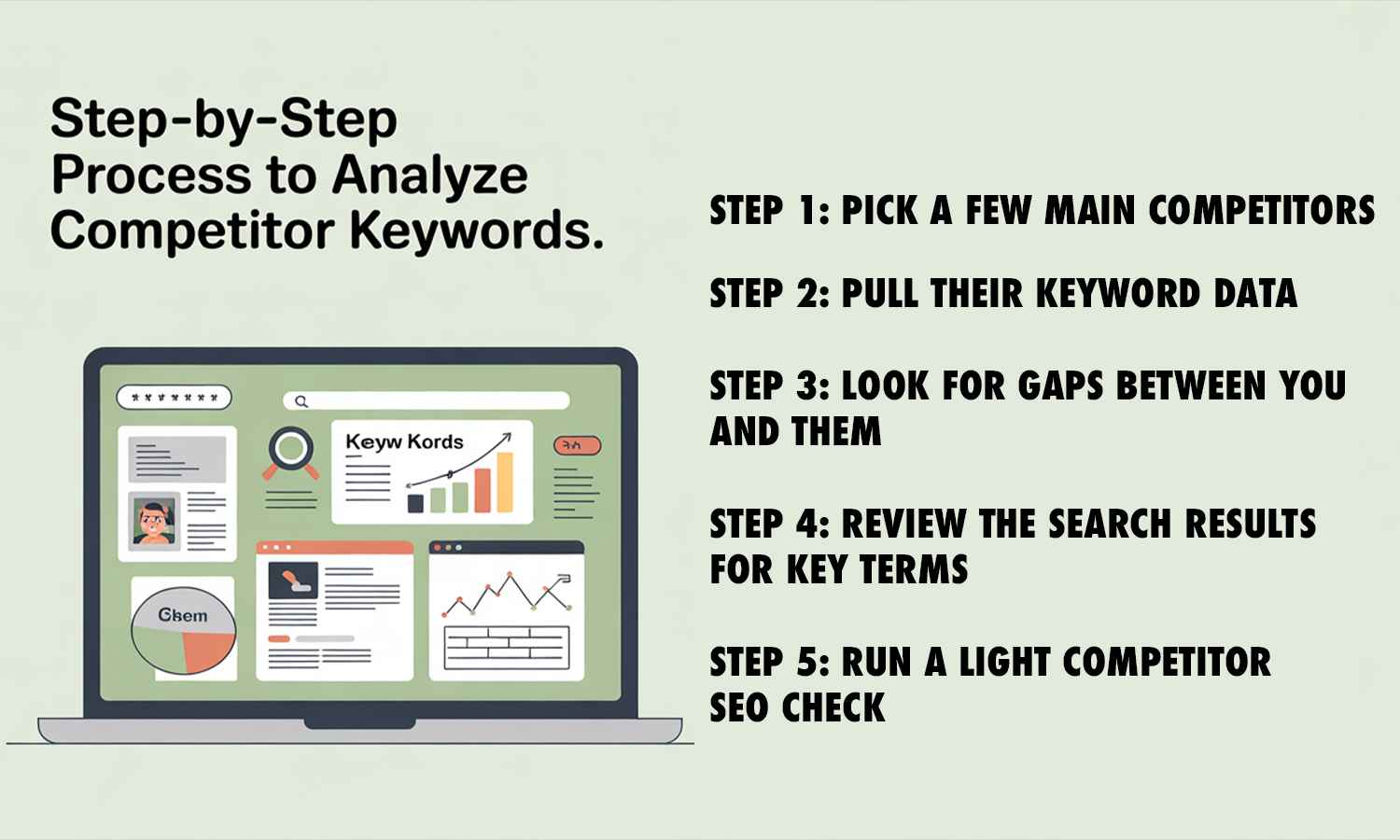
Step-by-Step Process to Analyze Competitor Keywords
Now, let us go step by step through a simple process you can follow when you Analyze Competitor Keywords.
Step 1: Pick a few main competitors
Start with three to five websites from your earlier list. Do not try to track twenty domains on day one. Keep it focused.
Step 2: Pull their keyword data
Use your favourite SEO tools for competitor research to pull a list of the keywords those domains rank for. Most tools will allow you to export that data so you can review it more easily.
From this, you can find competitor keywords that you did not think of before and see which pages are bringing them the most traffic.
Step 3: Look for gaps between you and them
Once you have your competitor data, compare it with your own ranking data. This is where a clean keyword gap analysis helps.
You are looking for:
- Keywords they rank for where you have no visibility
- Keywords where they are on page one and you are buried deeper
- Topics that they have covered with multiple pages and you have barely touched
This gives you a first view of opportunities.
Step 4: Review the search results for key terms
Do not only look at raw data. For your most important topics, run a small SERP keyword analysis by manually checking what types of pages rank on page one.
Ask yourself:
- Are these blogs, product pages, category pages, or comparison pages?
- What style of content seems to work for this query?
- How deep or detailed are the top-ranking pages?
This shows you what Google currently expects for those searches.
Step 5: Run a light competitor SEO check
At this stage, you can treat this like a small competitive SEO audit for your main topics. Look at page titles, headings, internal links, and content length for the top competitors.
You are not trying to copy them. You are trying to understand what minimum standard you need to match or beat if you want to compete for that keyword set.
Analyzing Competitor Content to Understand Keyword Intent
Once you Analyze Competitor Keywords, the next step is to look at the content behind those keywords. This is where intent becomes very important.
Open a few top-ranking pages for each main query and ask:
- What exact problem are they solving for the user?\
- Are they teaching, comparing, or pushing towards a purchase?
- How are they using headings, FAQs, and examples to support the topic?
This kind of content mapping helps you understand why their pages rank, not just which words they use. When you spot patterns here, you get ideas on how to cover the same topics in a way that suits your brand and provides more clarity to the reader.
Turning Competitor Keywords Into a Winning Keyword Strategy
The real value comes when you take everything you learned and turn it into a clear plan.
Here is a simple way to do that when you Analyze Competitor Keywords:
- Take the gap keywords where they rank, and you do not
- Group them into themes and subtopics
- Map those themes to new or existing pages on your site
- Decide what type of content will work best for each topic
When you do this properly, you start building a content plan that is based on real search demand and real competition, not just ideas in your head. Over time, this gives you a true competitive advantage SEO teams can rely on, because you are always working with a clear picture of the landscape.
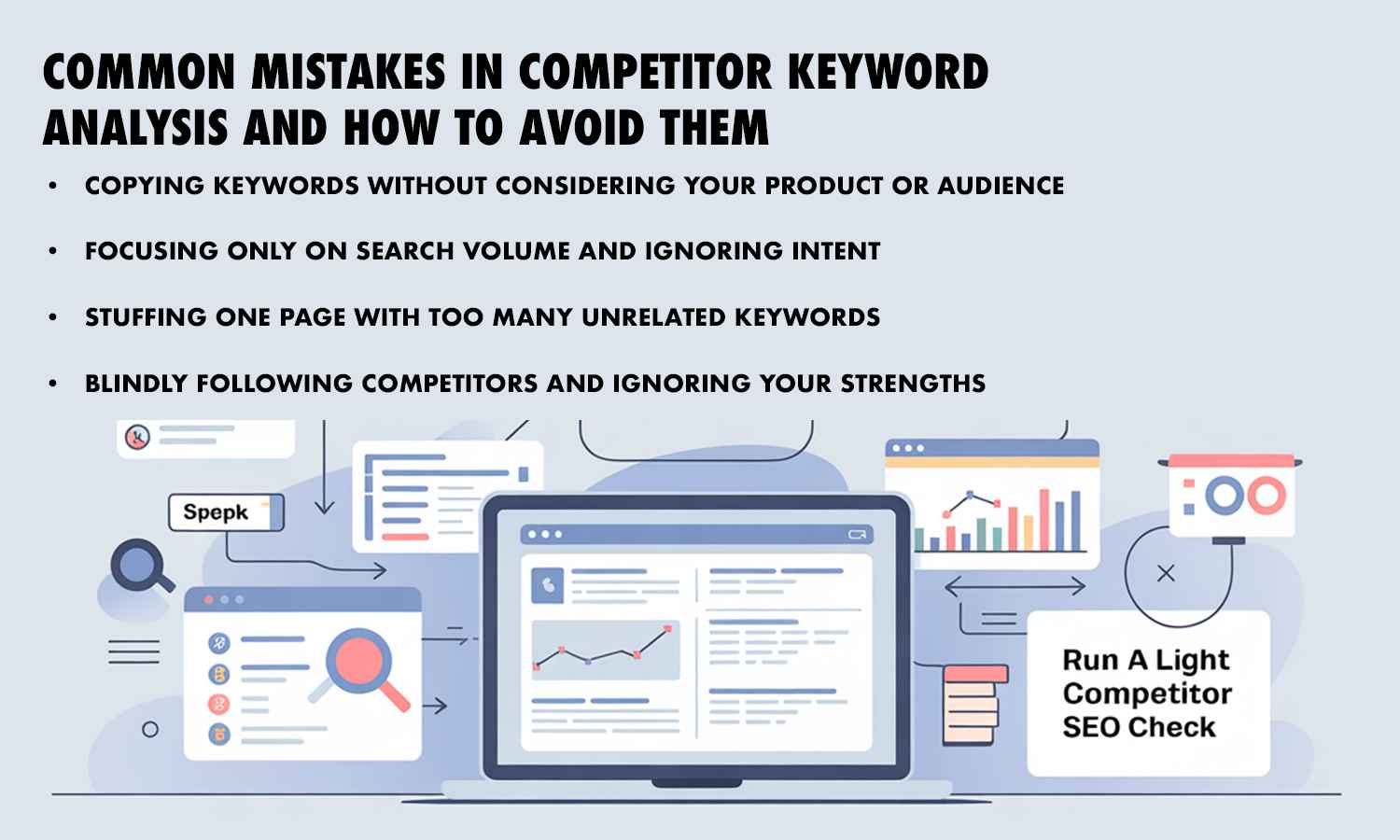
Common Mistakes in Competitor Keyword Analysis and How to Avoid Them
While it is powerful to Analyze Competitor Keywords, there are a few common mistakes you should avoid:
- Copying every keyword without thinking about your own product or audience
- Ignoring search intent and focusing only on volume
- Overloading a single page with too many unrelated keywords
- Forgetting your own strengths and blindly following competitor topics
The fix is simple: treat competitor data as a guide, not a script. Use it to inform your decisions, but always check if a keyword actually makes sense for your brand, your offers, and your long-term plan.
How Seodada Helps You Analyze Competitor Keywords
All of this is easier when you have the right structure and tools in place. When you Analyze Competitor Keywords through Seodada, you are not just staring at a big spreadsheet of terms. You get a clearer view of:
- Which competitors matter most for your main topics
- Where they rank and where you have gaps
- How your pages perform against theirs over time
Seodada helps you combine competitor keyword data, your own rankings, and content insights into one workflow, so you can move from “this is interesting” to “this is what we will publish next” without confusion.
If you want to bring more order into your competitor's work and build a keyword plan that actually matches your market, this is exactly where Seodada fits in.