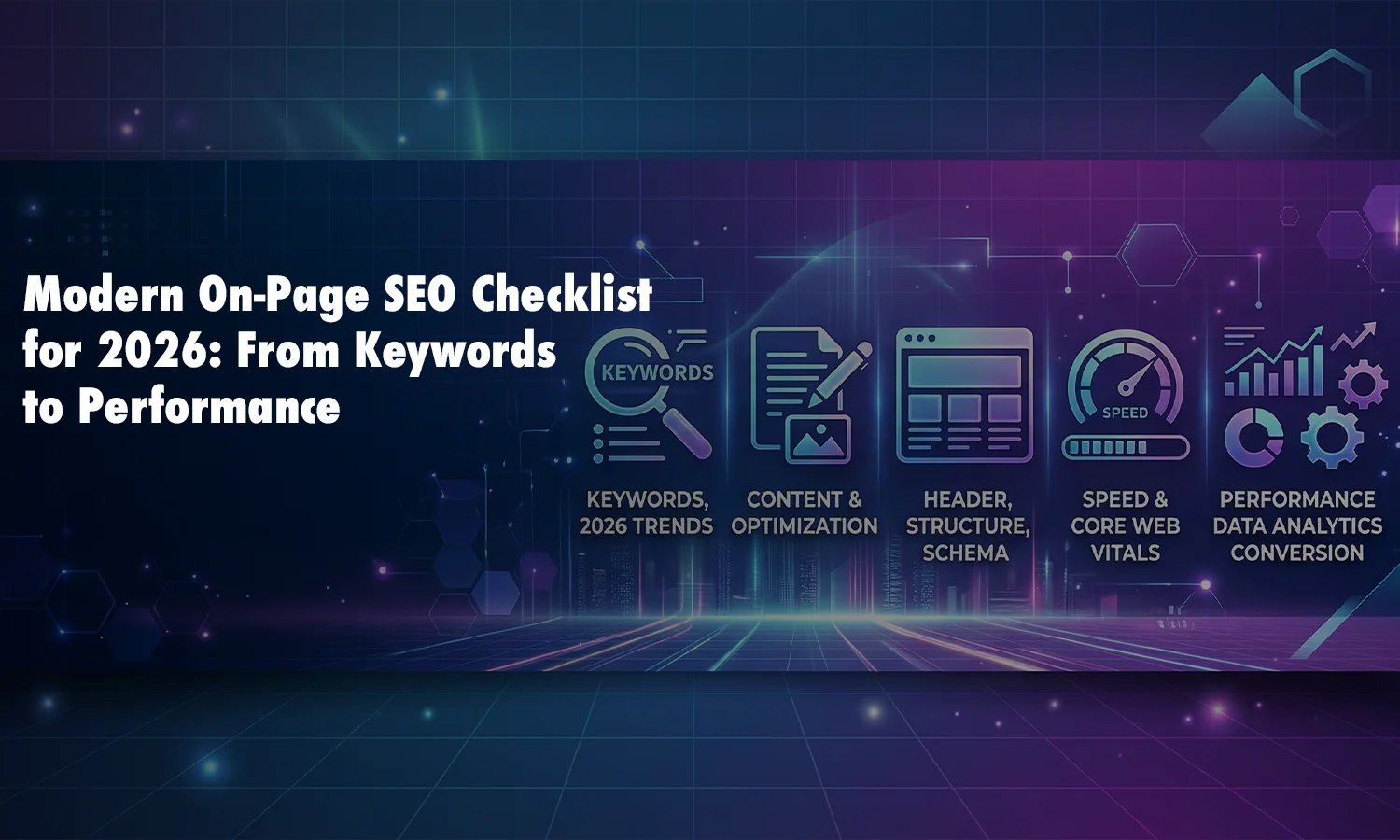
Writing great content is only half the battle. To win in 2026, you must ensure that search engines can find, read, and trust your pages. This on-page seo guide will walk you through the essential steps to turn your website into a high-performing asset.
At SEODADA we focus on technical clarity. By following this on-page seo checklist you can replace guesswork with a proven strategy that drives website on-page optimization.
Keyword Research with Search Intent in Mind
Before you write a single word, you must understand the "why" behind a search. In 2026, search engines prioritize search intent optimization. Users are usually looking for one of three things: Information, a specific Website, or a Transaction.
If your keyword is "best running shoes" but your page only talks about the history of shoes, you have a mismatch. Use keyword research methods to find terms that align with what your audience actually wants to achieve.
Crafting SEO-Optimized Title Tags That Drive Clicks
Your title tag is your digital billboard. It must be under 60 characters so it does not get cut off. Place your primary keyword near the beginning to help with seo page optimization. A good title balances high rankings with a reason for the user to click.
Structuring Pages with a Clear Primary Heading (H1)
Every page needs exactly one H1 tag. This is the "title" of your book. It tells the search engine and the reader exactly what the page is about. On-page seo best practices suggest making your H1 clear and descriptive. Avoid using more than one H1 as it confuses search bots.
Writing Compelling Meta Descriptions for Higher CTR
While meta descriptions do not directly affect your rank, they act as sales copy. A great 150-character summary can turn a simple impression into a click. This is a vital part of on-page seo techniques because a high click-through rate tells search engines your page is relevant.
Creating Clean, Readable, and SEO-Friendly URLs
Keep your URLs short and meaningful. A URL like seodada.com/on-page-seo-checklist is much better than a string of random numbers. Clean URLs are easier for users to share and for bots to crawl during website on-page optimization.
Placing Keywords Naturally Within Page Content
Gone are the days of "keyword stuffing." In 2026, you should place your keyword in the first 100 words, a few subheaders, and the conclusion. This helps with on-page seo factors without making your writing sound like a robot wrote it.
Improving Content Depth, Accuracy, and Usefulness
Search engines now reward "helpful content." Instead of worrying about word count, focus on whether you have answered the user's question completely. Use original data and clear examples to prove your on-page seo optimization is backed by expertise.
Using Header Tags (H2–H6) to Improve Readability
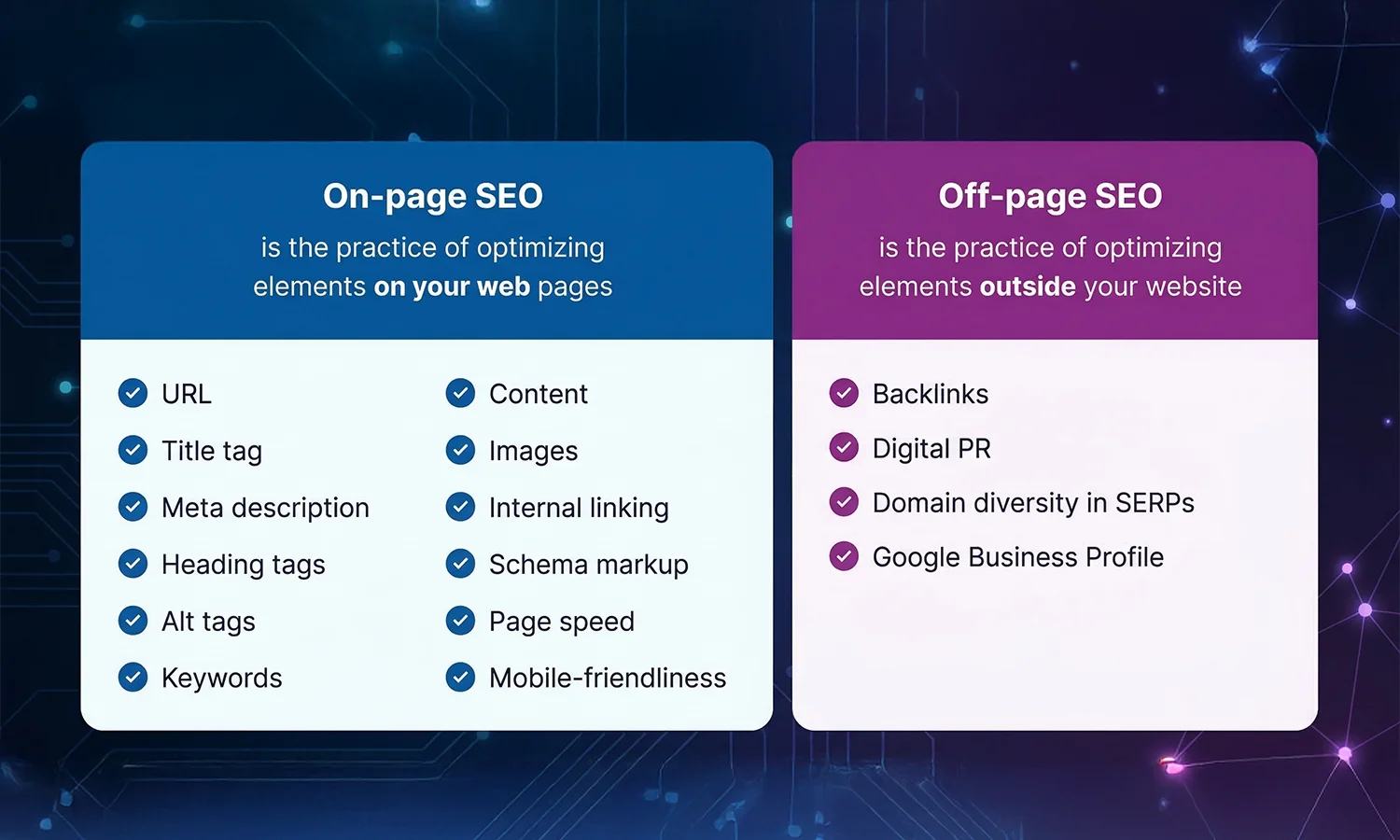
Use H2 and H3 tags to break up your text. This creates a "table of contents" for search bots. It also helps readers who like to scan pages. Organizing your content this way is a core part of how to do seo correctly.
Strengthening Internal Linking for Better Crawlability
Internal links are the roads that connect your site. Link your new posts to your high-authority pages. This helps distribute "link equity" and guides both users and bots through your website.
Enhancing Pages with Visual and Media Elements
Images and videos keep users on your page longer. High engagement is a massive ranking signal. Ensure every image has alt text so search engines can "read" your visuals. This is a key step in any seo optimization checklist.
Adding Structured Data for Better Search Visibility
Schema markup is a tool that helps search engines understand the context of your data. It allows you to appear in "Rich Results" with star ratings or FAQs. This makes your link stand out in a crowded search result page.
Foundation Layer: Essential Technical SEO Checks
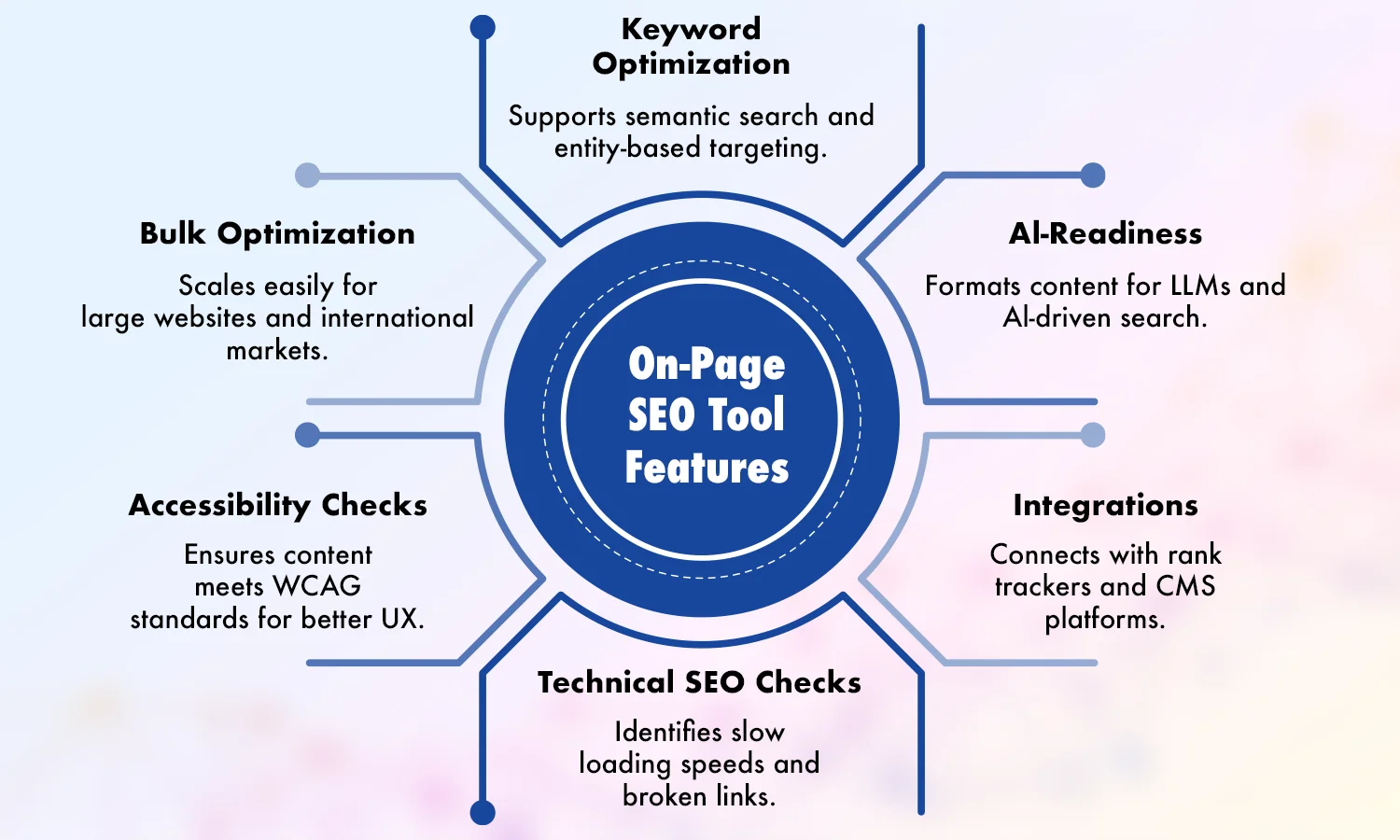
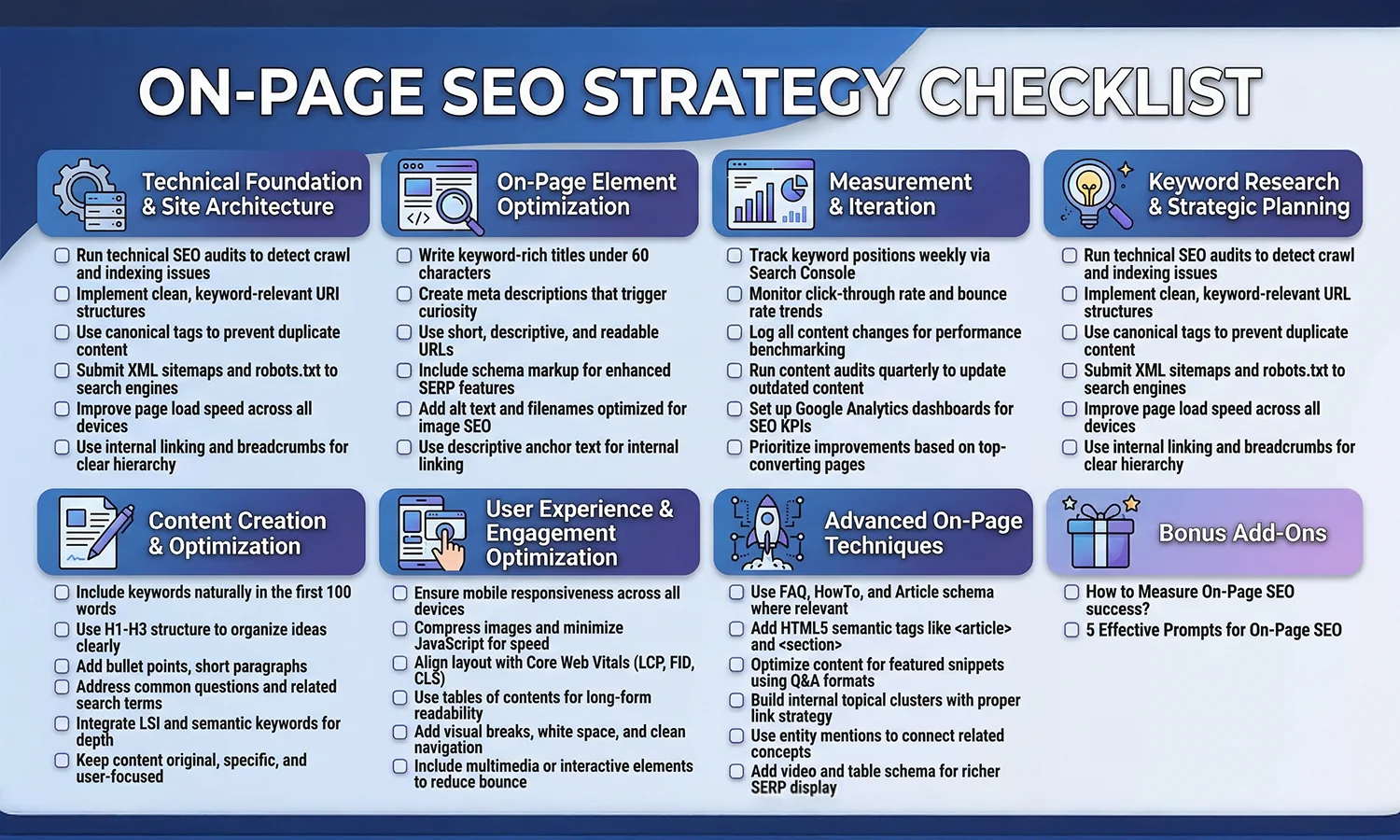
Your on-page work will fail if your technical foundation is weak. Use SEODADA to run these technical on-page seo checks regularly.
Ensuring Search Engines Can Access Your Pages
Check your robots.txt file to ensure you are not accidentally blocking search bots. If they cannot crawl your page, you will not rank.
Optimizing Website Speed for Better User Experience
In 2026, speed is a non-negotiable factor. Pages should load in under 2.5 seconds. Use SEODADA to monitor your Core Web Vitals. Slow sites lose visitors and rankings.
[Image showing Core Web Vitals performance metrics]
Making Pages Fully Responsive Across Devices
Most people search on their phones. Your site must look and work perfectly on every screen size. This "mobile-first" approach is essential for modern on page seo.
Conclusion
Success in 2026 comes down to consistency. Mastering your on-page seo optimization means doing the small things right every time. By aligning your content with search intent and maintaining a strong technical foundation, you turn your website into a growth engine. Use the SEODADA diagnostic tools to stay ahead of the curve and ensure your site remains visible, fast, and authoritative.
Key Takeaways
- Align your keywords with the user's true intent before you start writing.
- Use a single H1 tag and clear H2-H4 subheaders to structure your page.
- Optimize your titles and meta descriptions to improve your click-through rate.
- Focus on content depth and accuracy rather than just word count.
- Maintain a fast, mobile-friendly site to satisfy technical ranking factors.